Computational fluid dynamics on ancient arthropod gills
Some context
How did early animals conquer land ?
We know this has happened more than once (and in vastly different animal groups). Yet, how terrestrialization actually plays out remains somewhat unclear. Conquering land requires a suite of adaptations, ranging from physiology to behaviour. One major obstacle to transitioning from a marine to a terrestrial environment is respiration: structures optimized for underwater respiration are likely to perform poorly in the air, and vice versa. In early tetrapods, this conundrum was solved by recruiting initially non-respiratory structures for blood oyxgenation, resulting in the conversion of swim bladders to lungs. In arthropods, this transition remains more enigmatic. Understanding the diversity and evolution of arthropod gills in deep time is therefore particularly important, and part of my work at the Ortega-Hernández lab aimed to investigate the functional characteristics of gills in a range of Paleozoic arthropods.
Objectives
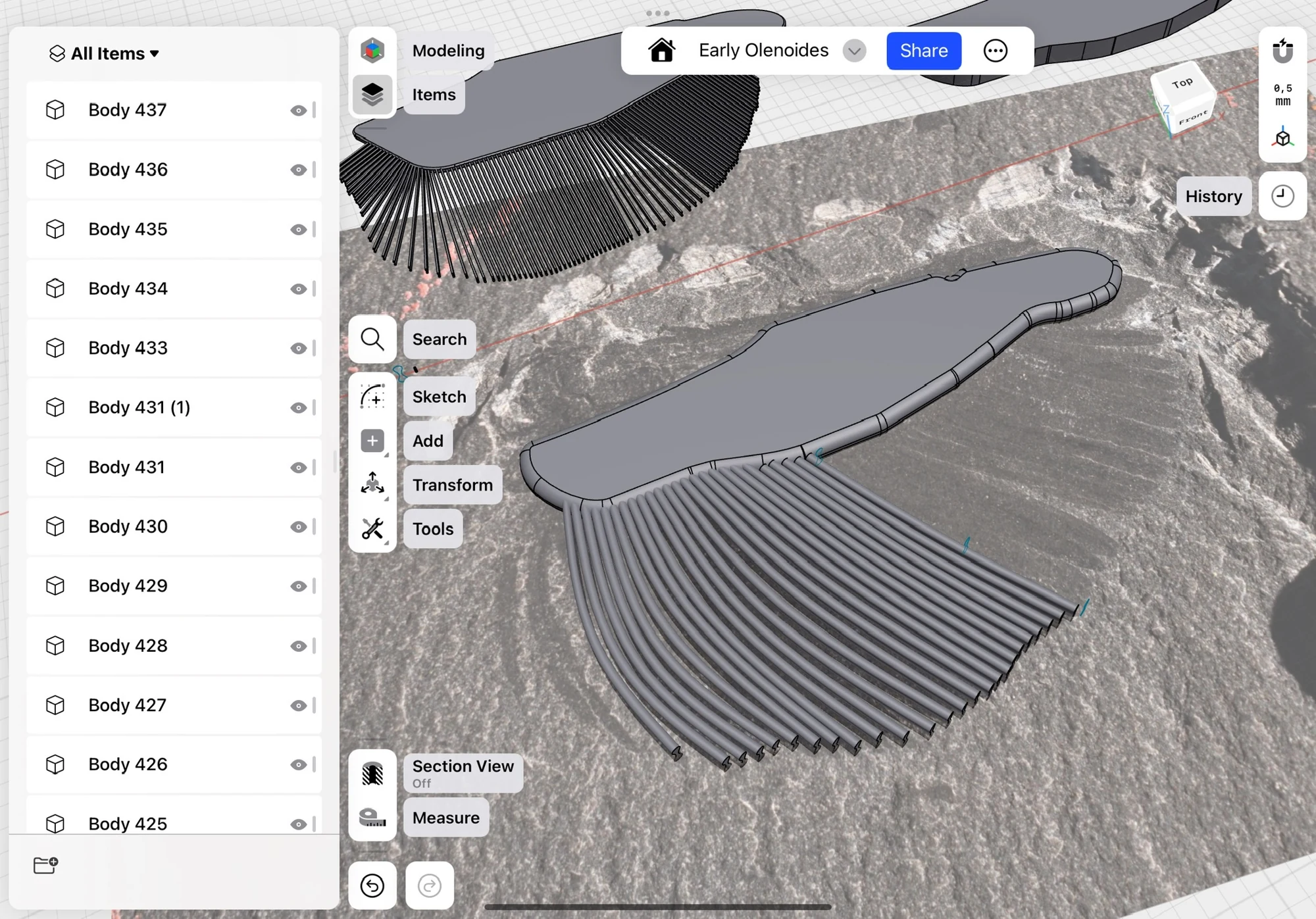
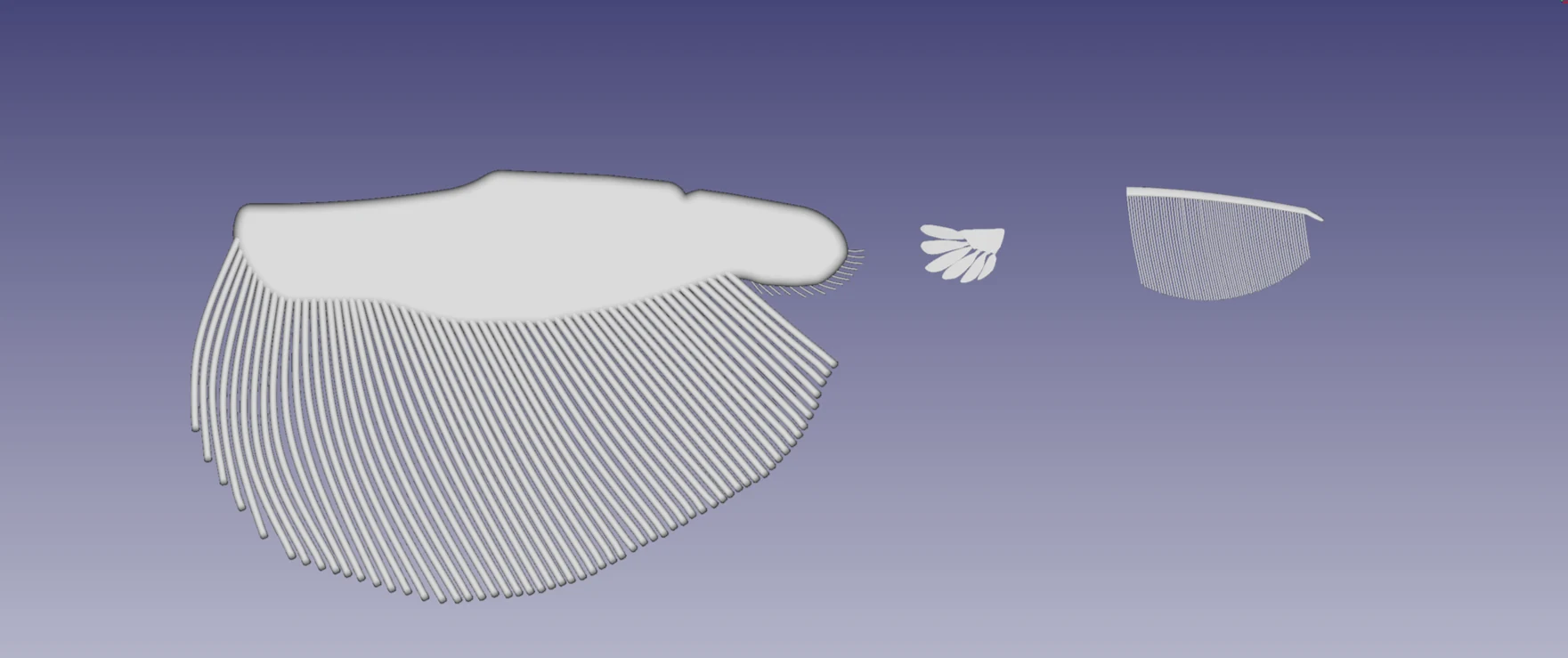
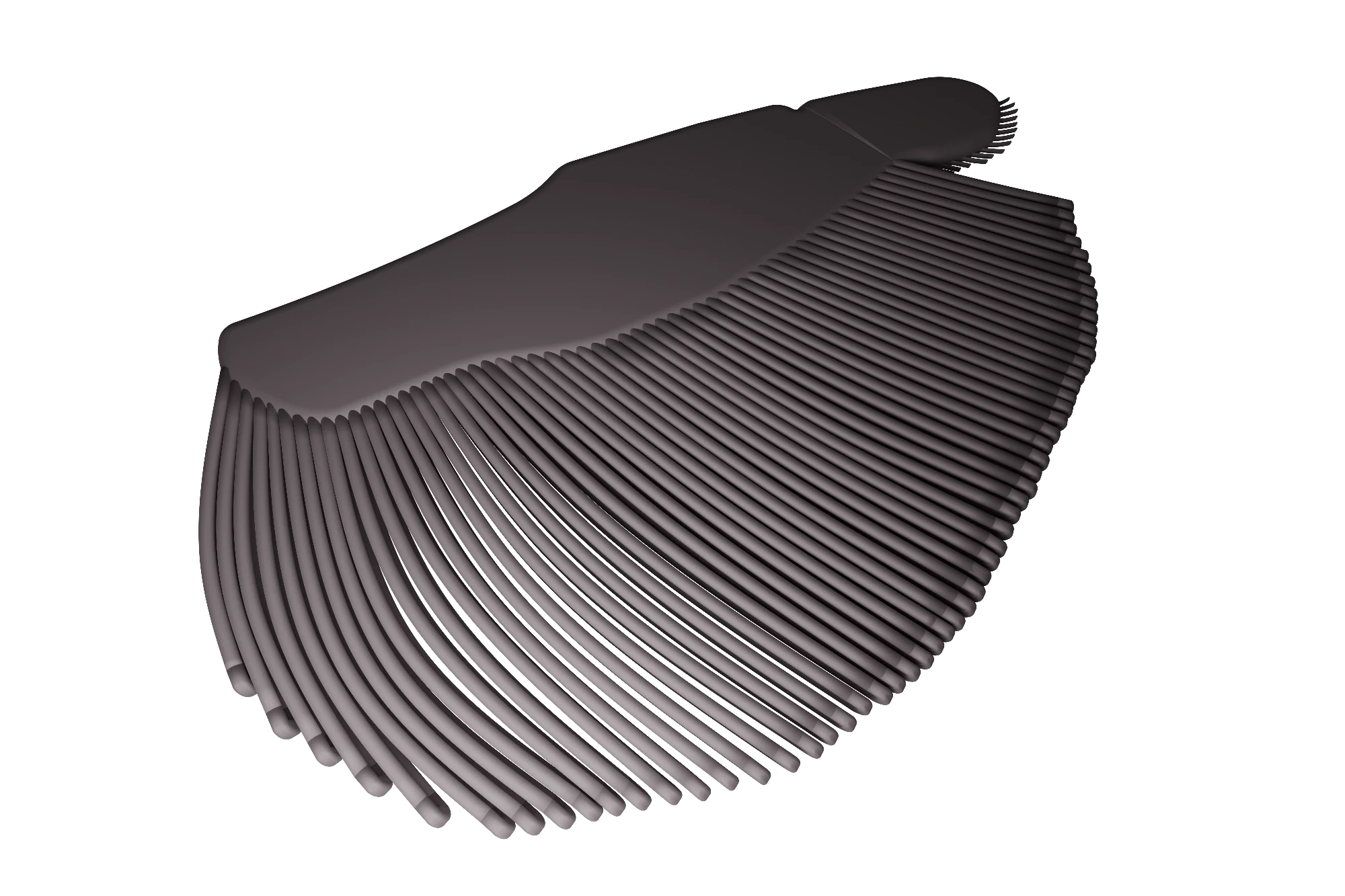
- Construct morphologically accurate 3D gill models for various extinct taxa, as informed by exceptionally preserved (lagerstätten) fossils.
Shapr3D
- Identify ecologically-relevant hydrodynamic parameters associated with optimal gill function
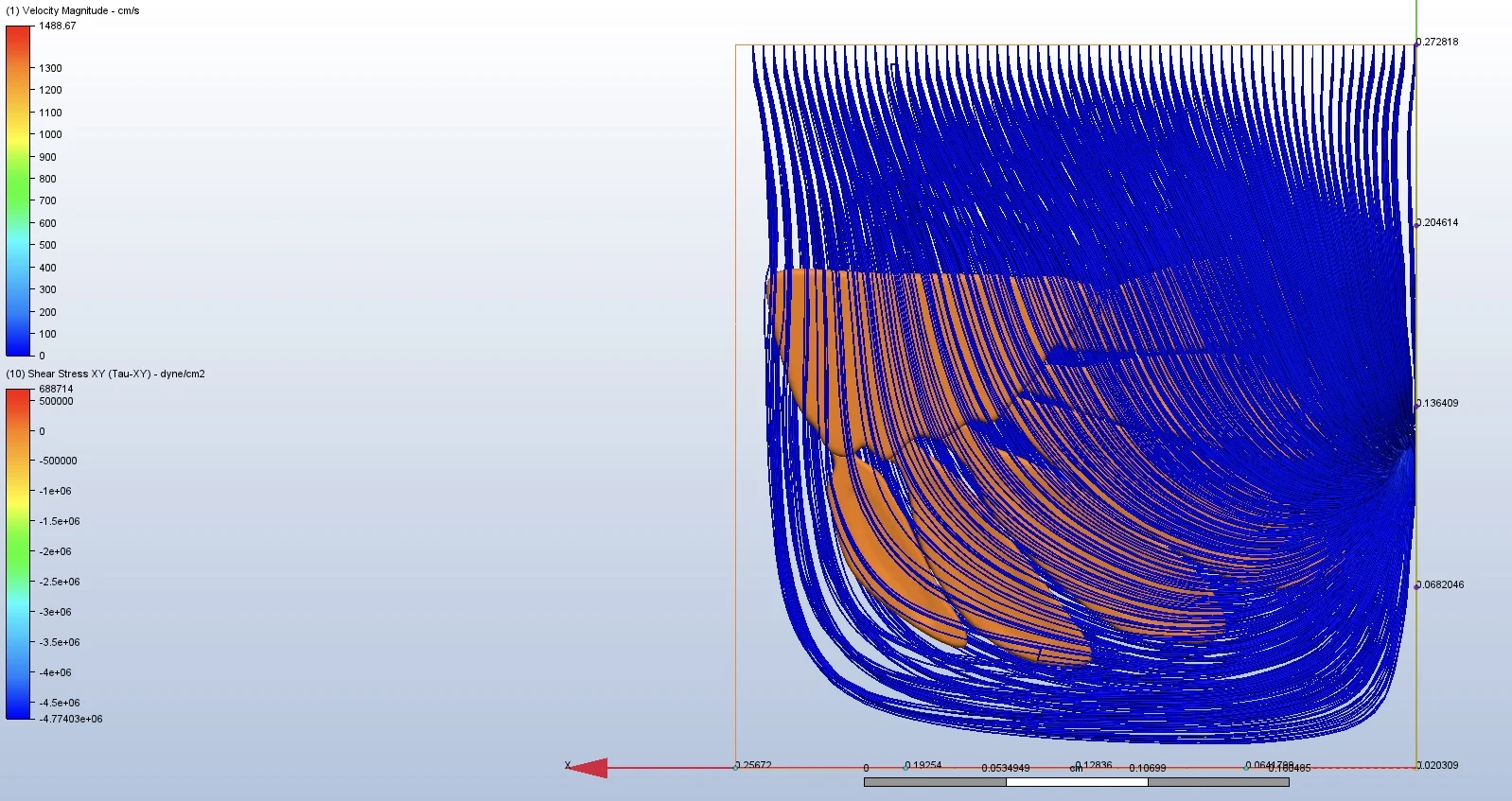
- Perform 3D computational fluid dynamics (3D-CFD) simulations to obtain a first assessment of the functional diversity of paleozoic respiratory systems.
Autodesk CFD