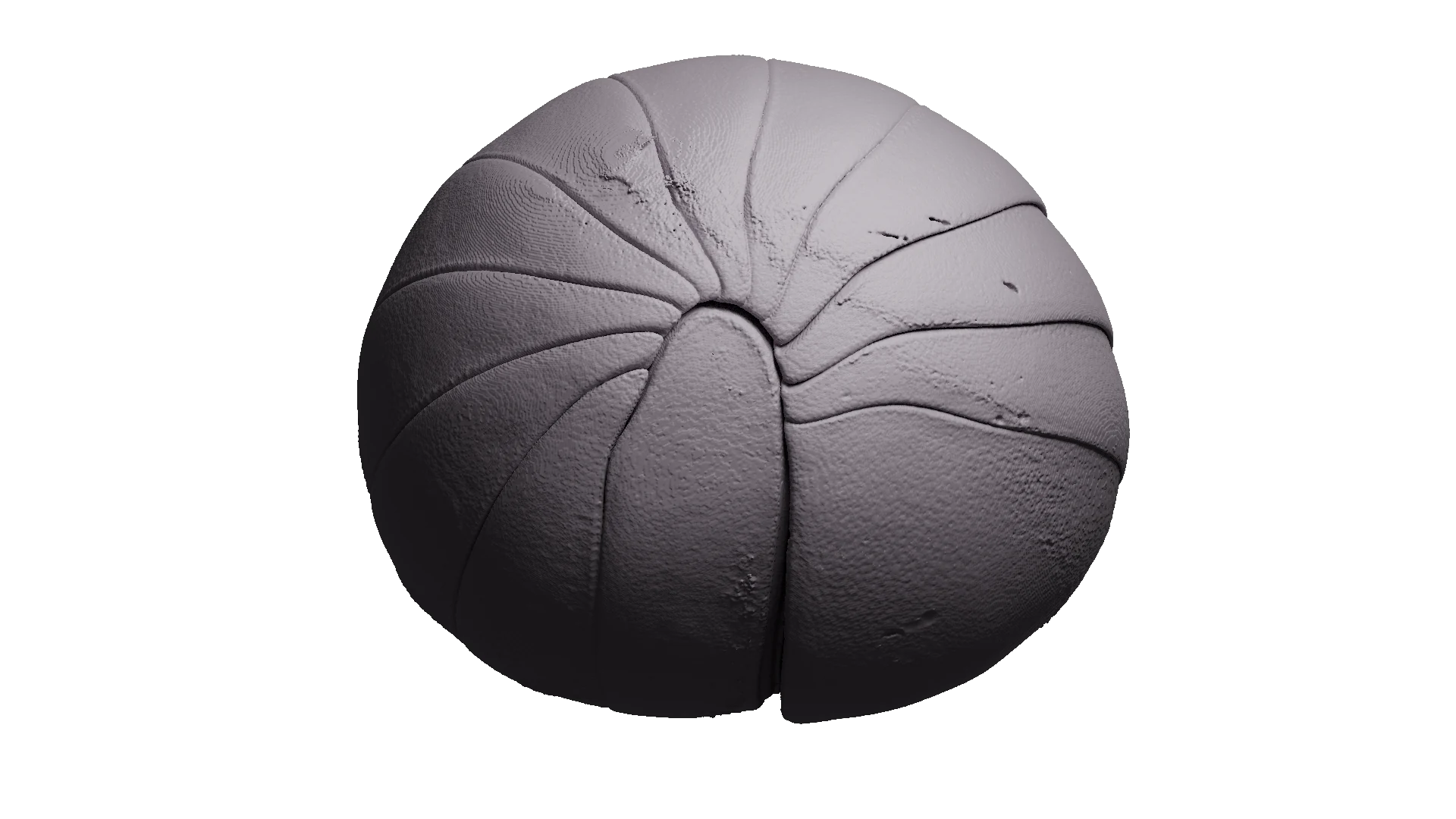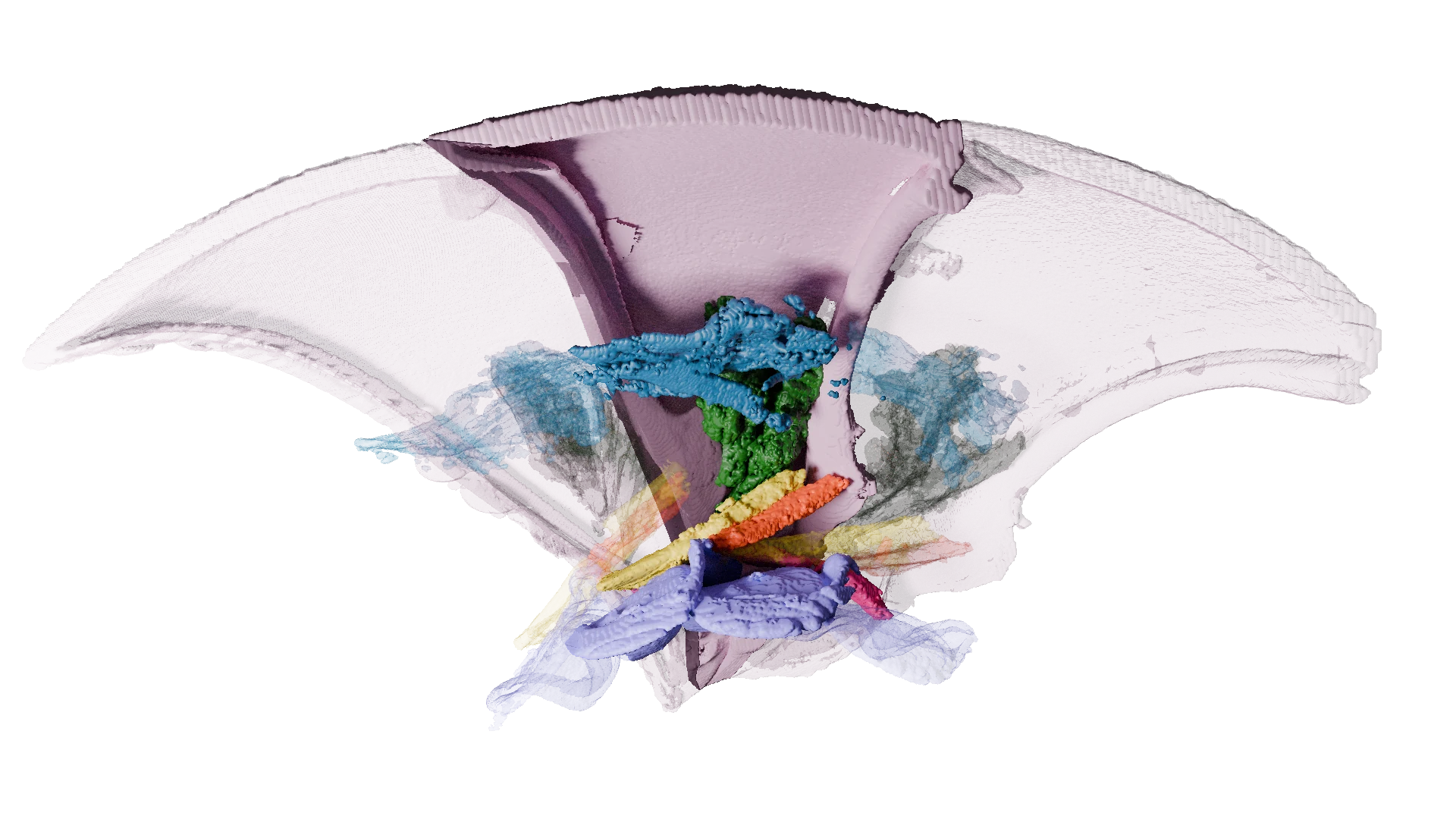
The euarthropod enrollment musculature
Some context
Why enroll ?
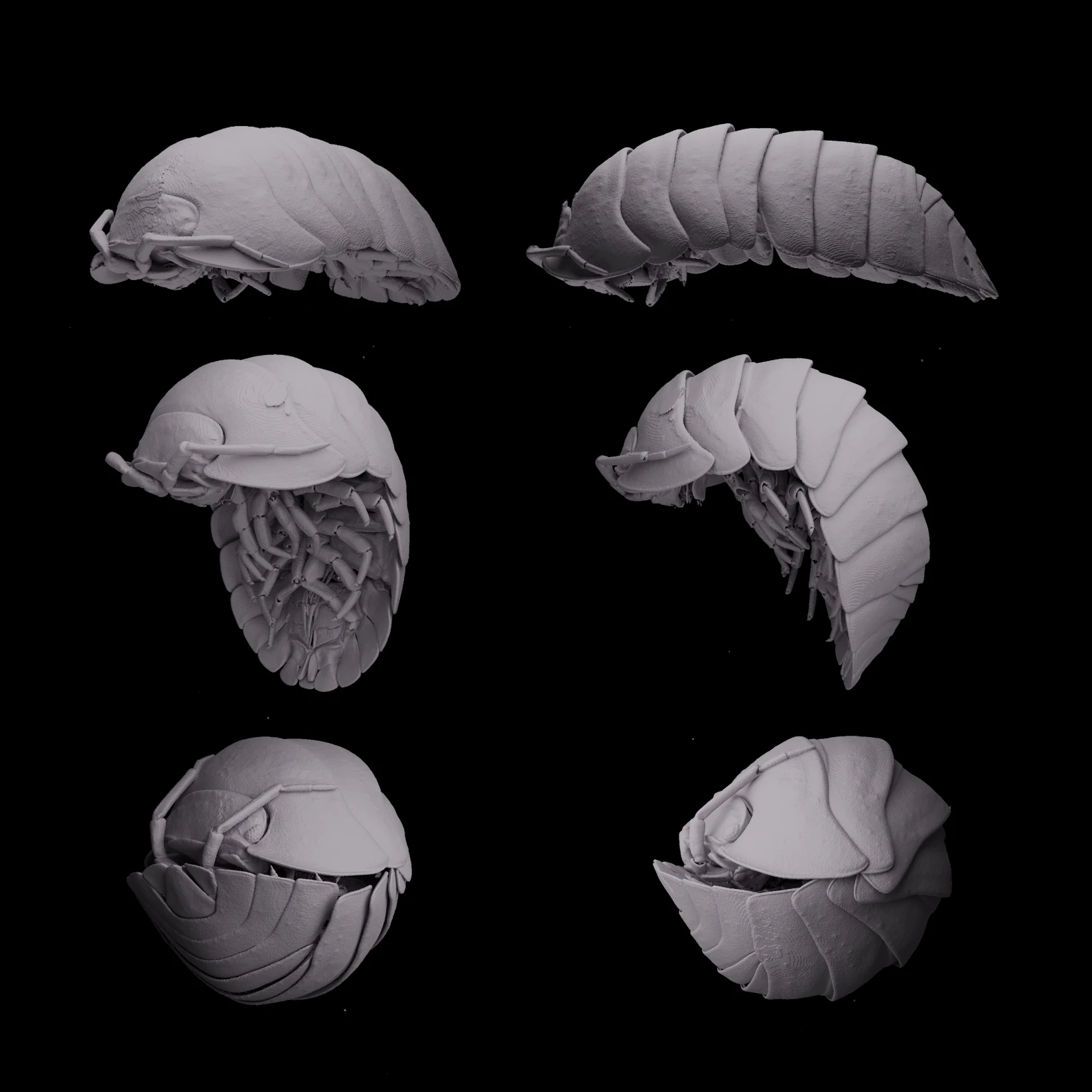
The ability to enroll into a tight ball —also known as volvation, or conglobation— is a highly effective defensive strategy. It is pervasive in animals, from vertebrates (e.g. armadillos) to euarthropods. Enrolling exposes a hard, spherical surface while protecting the often softer ventral parts of the body, presenting a significant adaptive advantage in the face of predation.
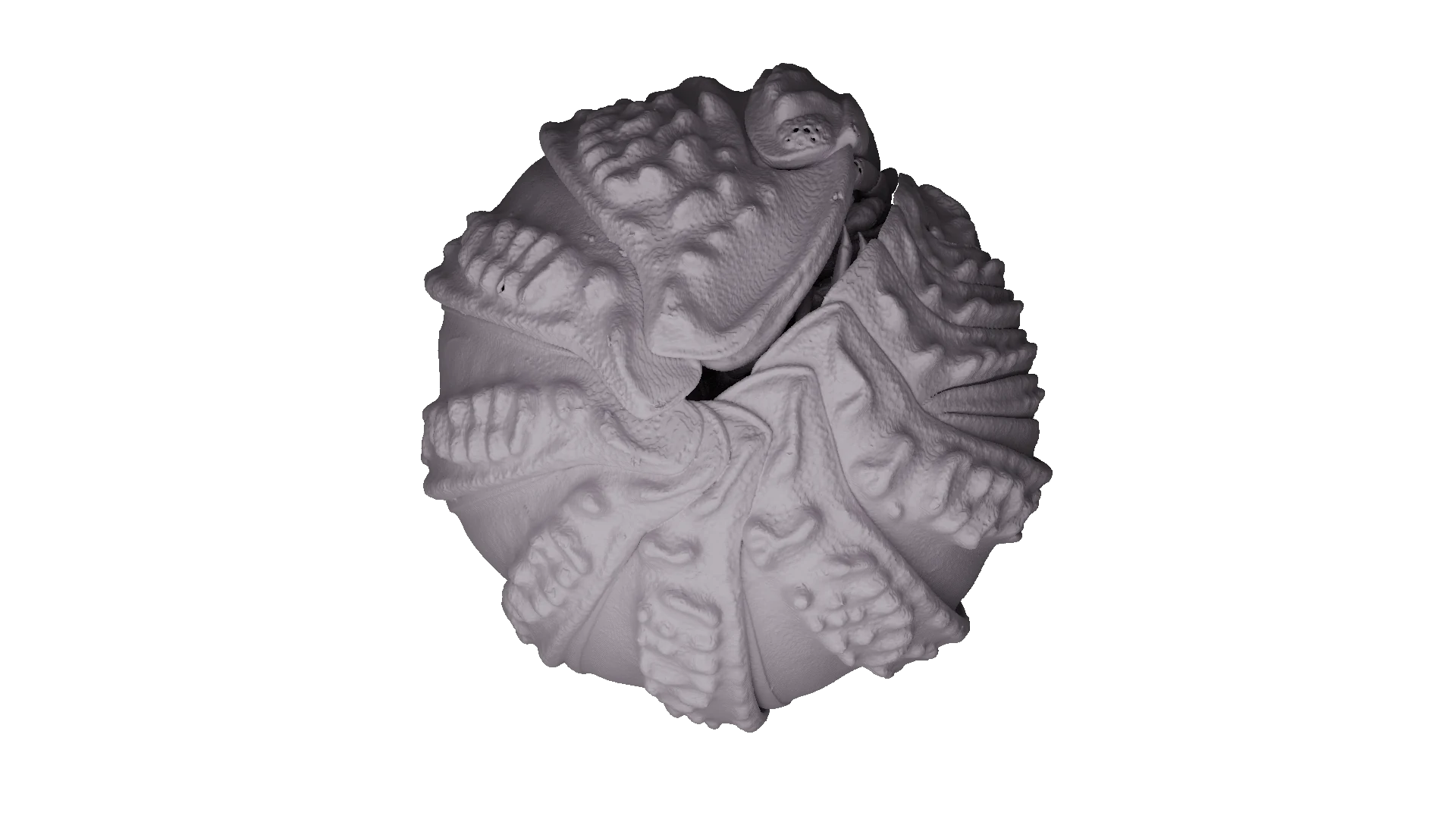
Two archetypal examples of conglobating taxa are the armadillidiid isopods and oniscomorph diplopods (the infamous roly polies, or pill bugs !), which convergently evolved the ability to fully enroll when threatened. However, the biomechanical basis of euarthropod conglobation remains unstudied.
Together with Sarah Losso and Javier Ortega-Hernández (OEB, Harvard University), I set out to characterize the trunk anatomy of enrolling euarthropods.
Popping the hood …
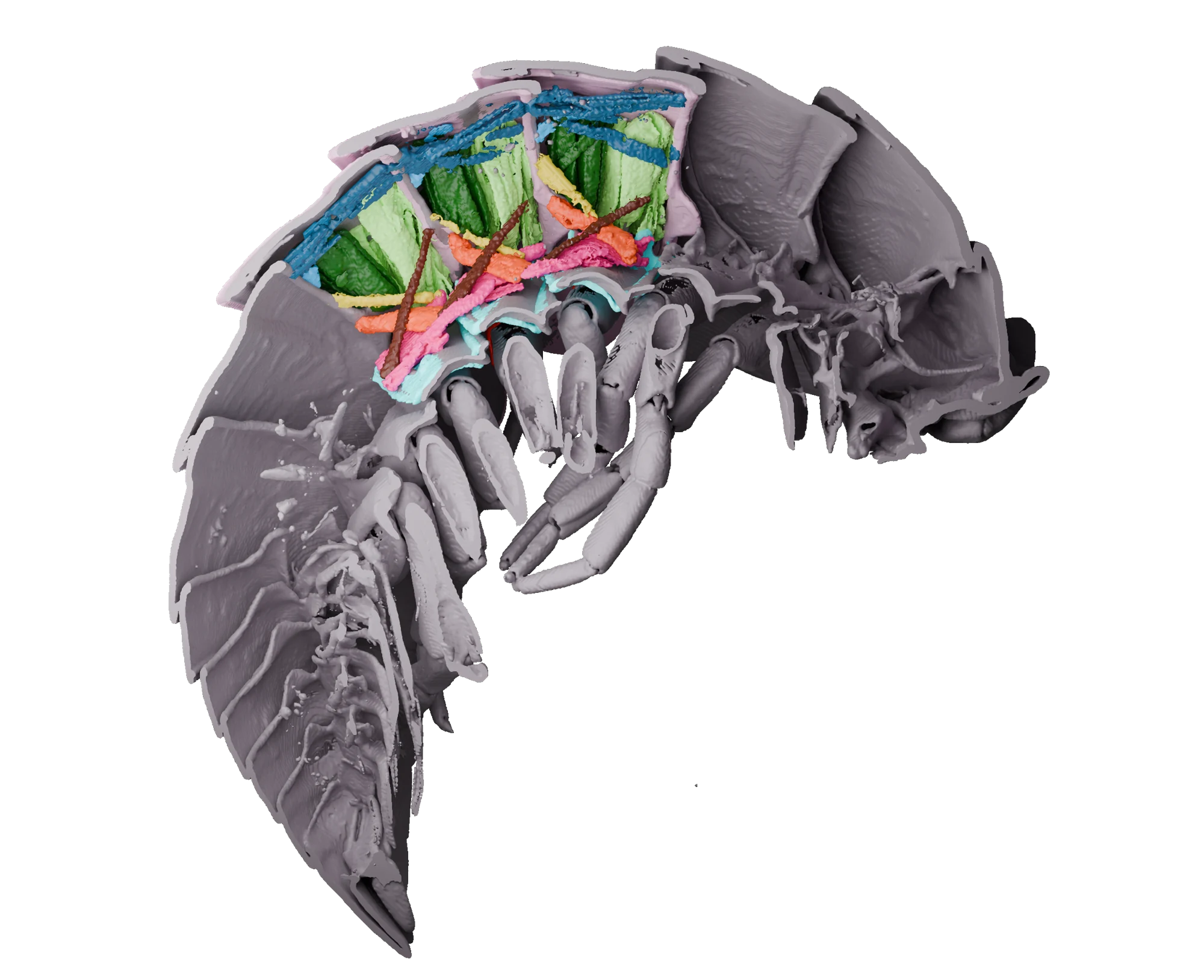
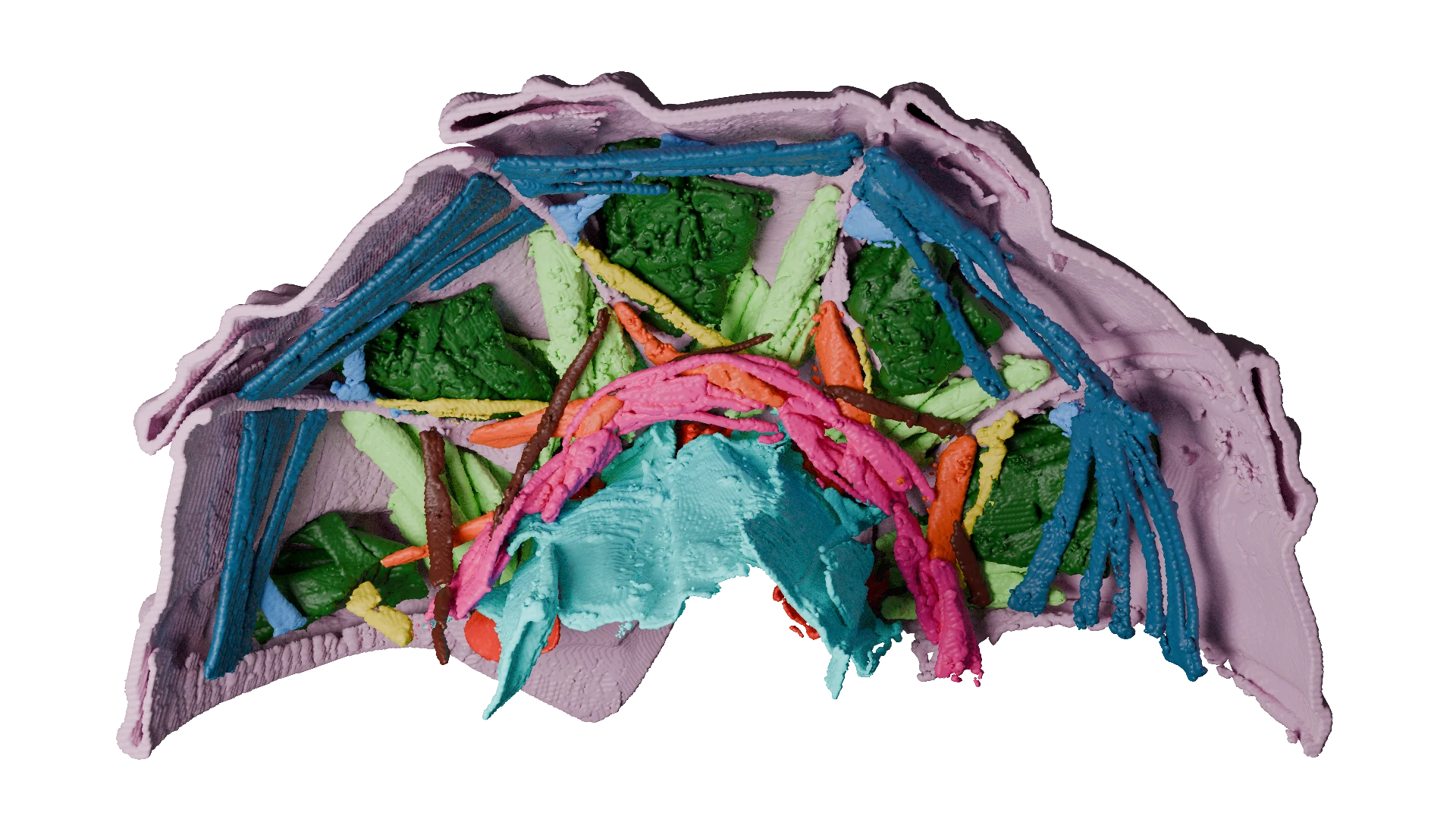
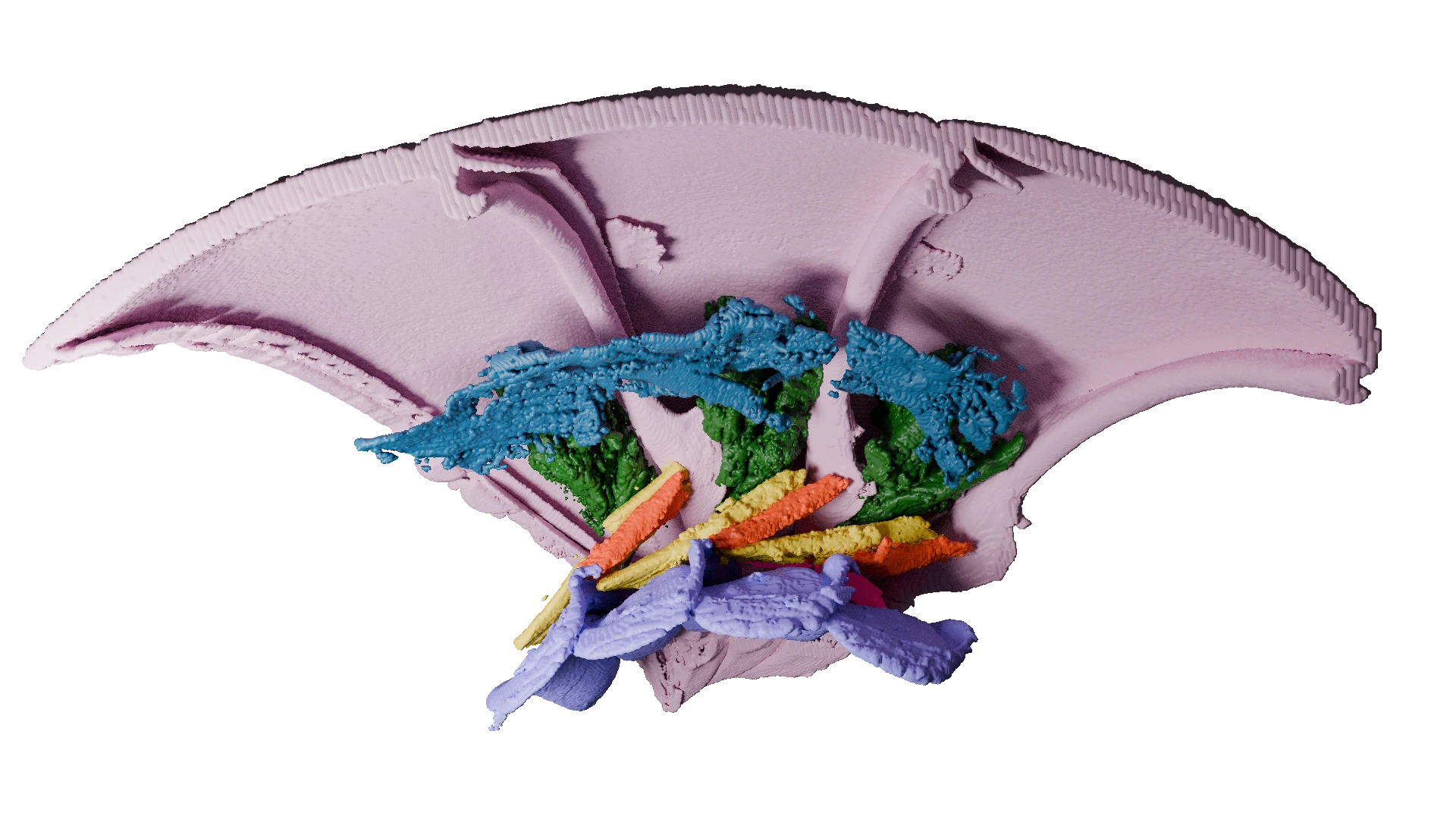
We used micro-CT scans of museum specimens to generate high-resolution 3D models of Armadillidiidae (pictured on the left: Armadillidium depressum) and Oniscomorpha. This involves chemical staining, imaging, tomographic reconstruction and 3D segmentation.
Main findings
- Long-term ethanol storage of museum euarthropod specimens produces distinct patterns of soft tissue degradation (tied to dehydration), but does not preclude their use for anatomical studies.
- Micro-CT represents an exciting alternative to dissection for the study of internal structures in valuable specimens (e.g. types) while generating highly sharable assets.
- The volvatory behaviours of Armadillidiidae and Oniscomorpha share common biomechanical principles. Dorsal, ventral, and dorsoventral muscles work together with specific internal exoskeletal features (notably a robust tergal apodeme) to regulate body flexure.
- However, the distinct exoskeletal architectures of these phylogenetically distant taxa constrain the kinematics of enrollment, leading to stark differences in their trunk musculatures.
- Conglobating isopods invest more in volvatory muscles than do their diplopod analogs, hinting at distinct selection pressures, some level of mechanical inefficiency, or both.