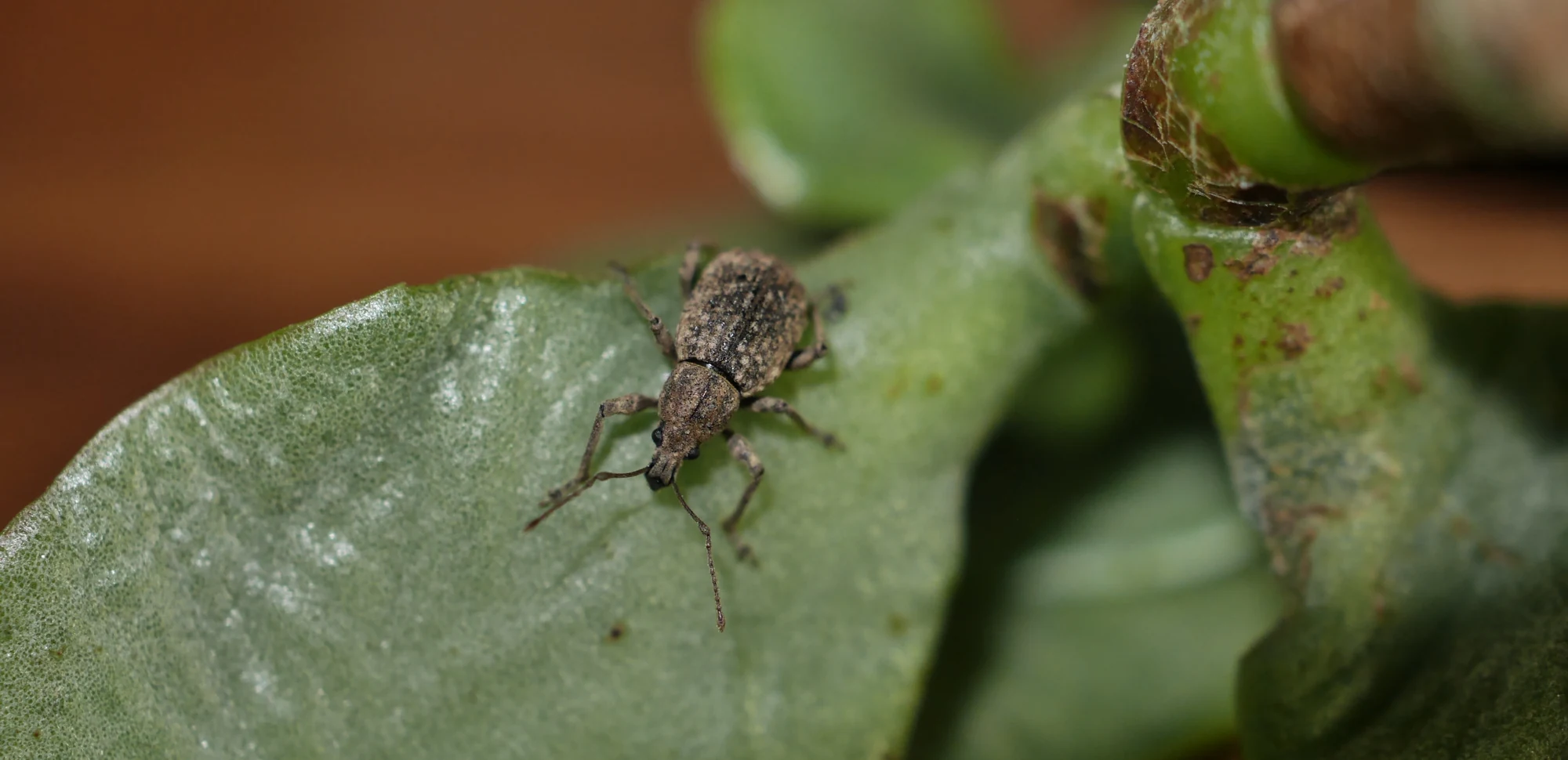
Phylogeography and species delimitation in Phlyctinus weevils
Some context
Phlyctinus weevils ?
South Africa’s agricultural industry has a bug problem. Phytophagous weevils belonging to the entimine genus Phlyctinus have recently ( < 200 years ago) undergone partial shifts from their ancestral Asteraceae host plants to cultivated crops, damaging orchards and vineyards at unprecedented scales.
Phlyctinus weevils cause millions of dollars of damage each year, yet they remain poorly understood. These invasion-prone curculionidae used to be lumped into one species, P. callosus, and it is only through recent systematic work that new species could be identified and described. Further, these problematic host shifts have occured at the level of lineages, and not whole species. While previous work has contributed important new insights into Phlyctinus diversity, precise characterization of pest lineages is crucial to design effective biocontrol strategies.
This project aims to assess the taxonomic level of host-shifted and non-shifted lineages in South Africa’s two most problematic Phlyctinus species, and search for common signatures of adaptation following parallel host shifts.
Project outline
Research questions:
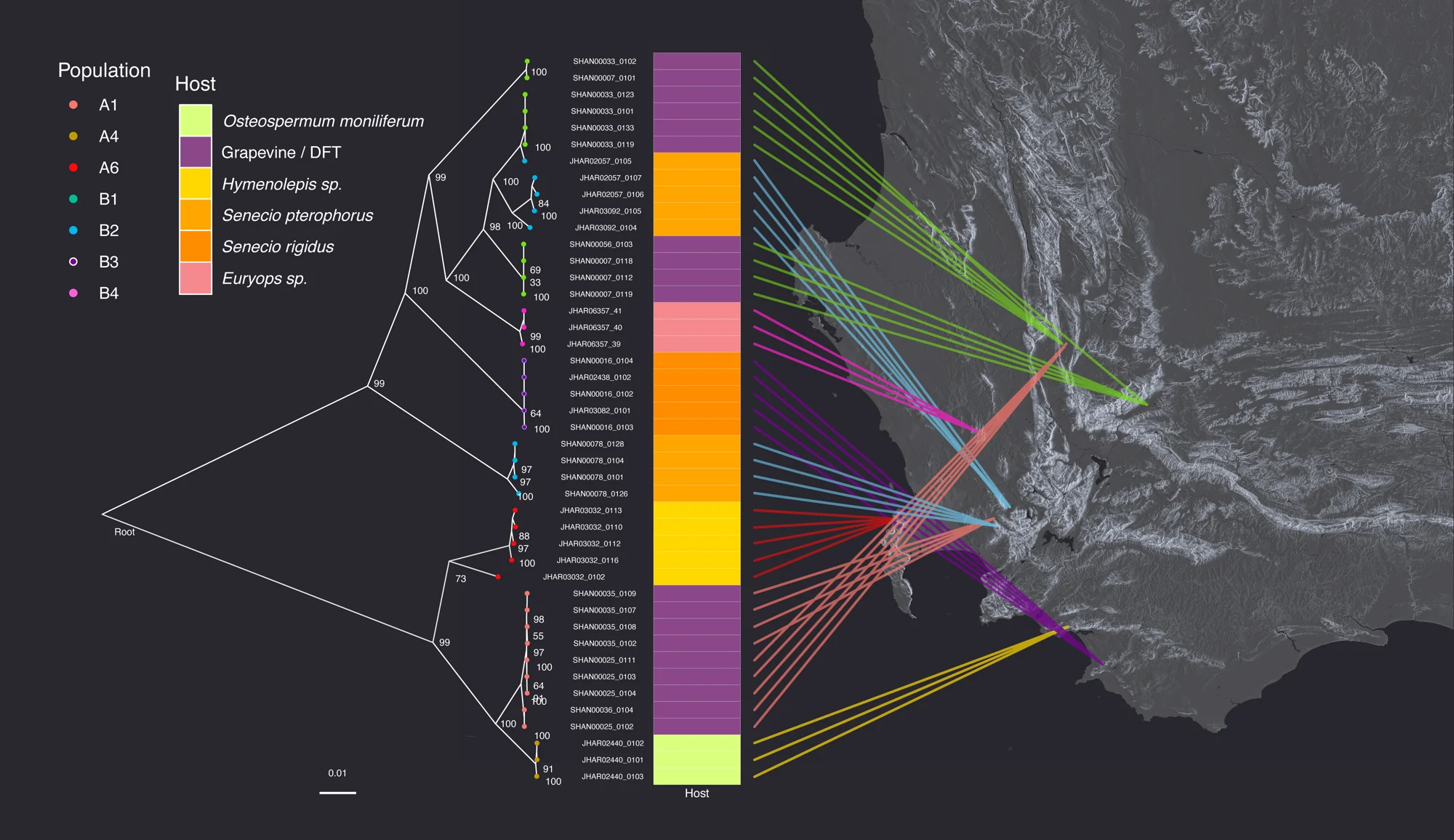
What is the taxonomic status of the multiple P. callosus and P. xerophilus lineages present in the Cape Floristic Region ?
Can genome scans reveal signatures of adaptation following host-plan shifts ?
Whole-genome resequencing of 44 Phlyctinus individuals
- P. callosus: 3 lineages
- P. xerophilus: 4 lineages
- raw-reads → quality checks → trimming → alignment → variant calling
- Extraction of mitochondrial genome
(MitoFinder)
Downstream analyses
- Molecular phylogenies
(W-IQ-TREE)
- Genetic PCA
(plink,tidypopgen)
- Population structure
(sNMF)
- Gene flow detection
(TreeMix)
- Delimitation analysis
(bPTP)
- Genome-wide Fst
(VCFtools)andBlastXof outlier regions
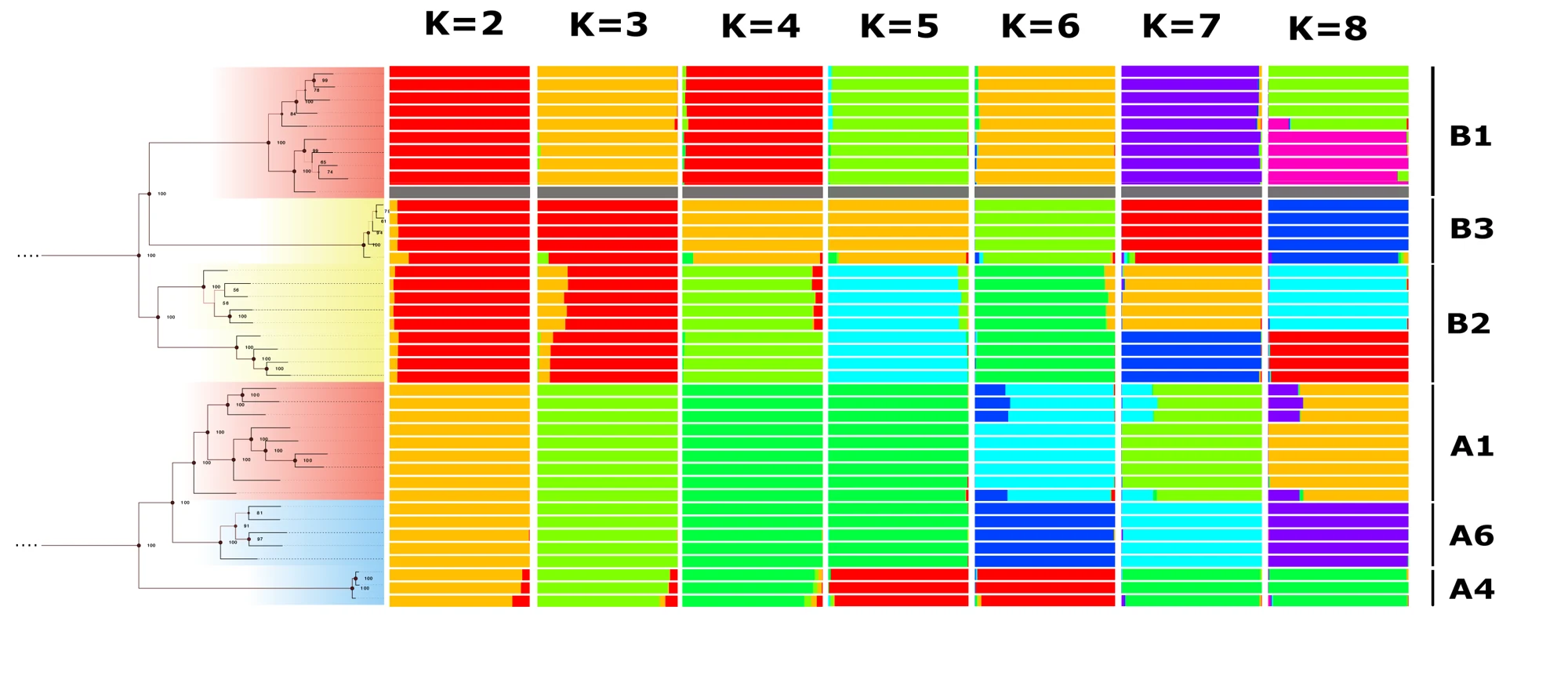
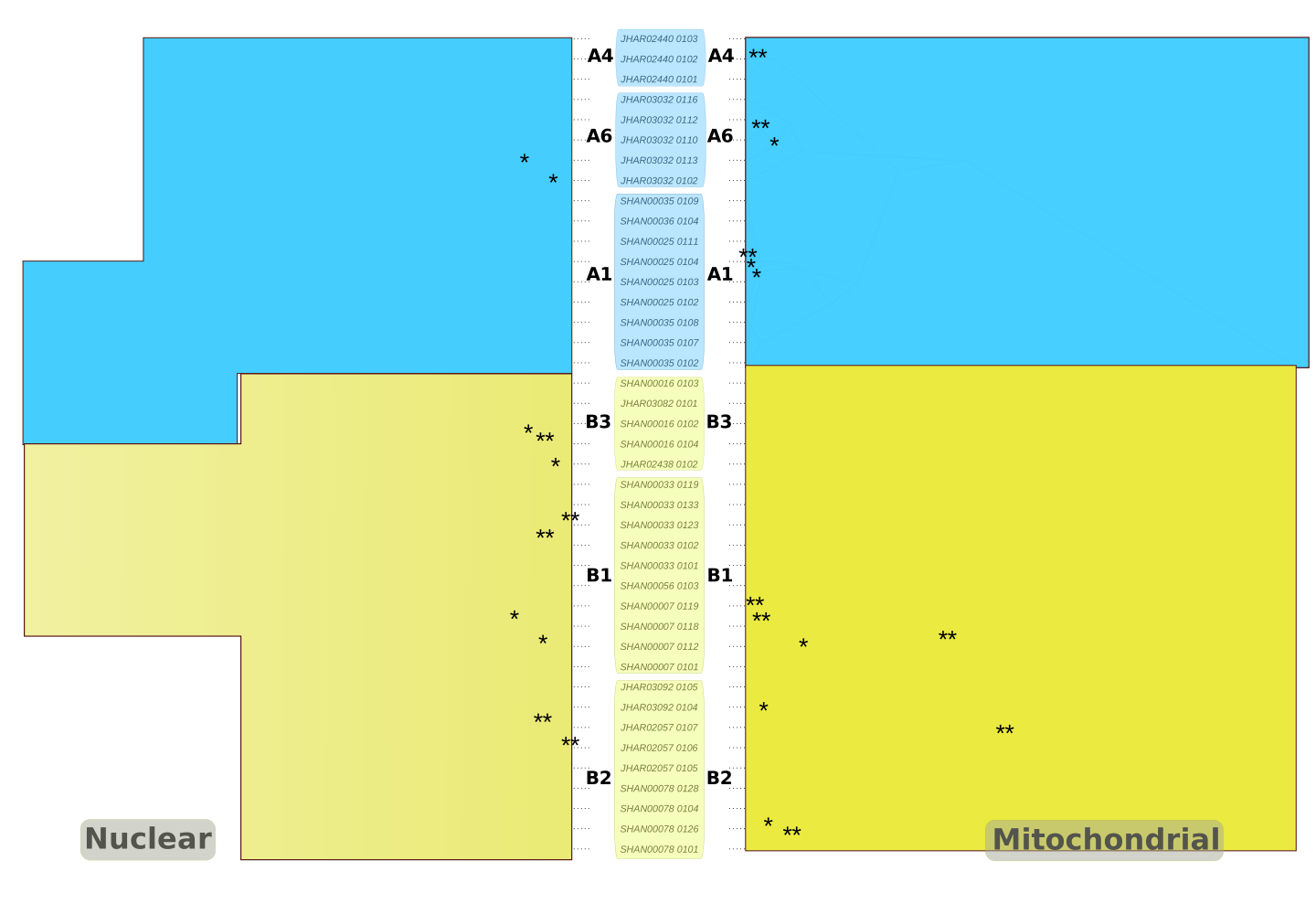
sNMF (preliminary)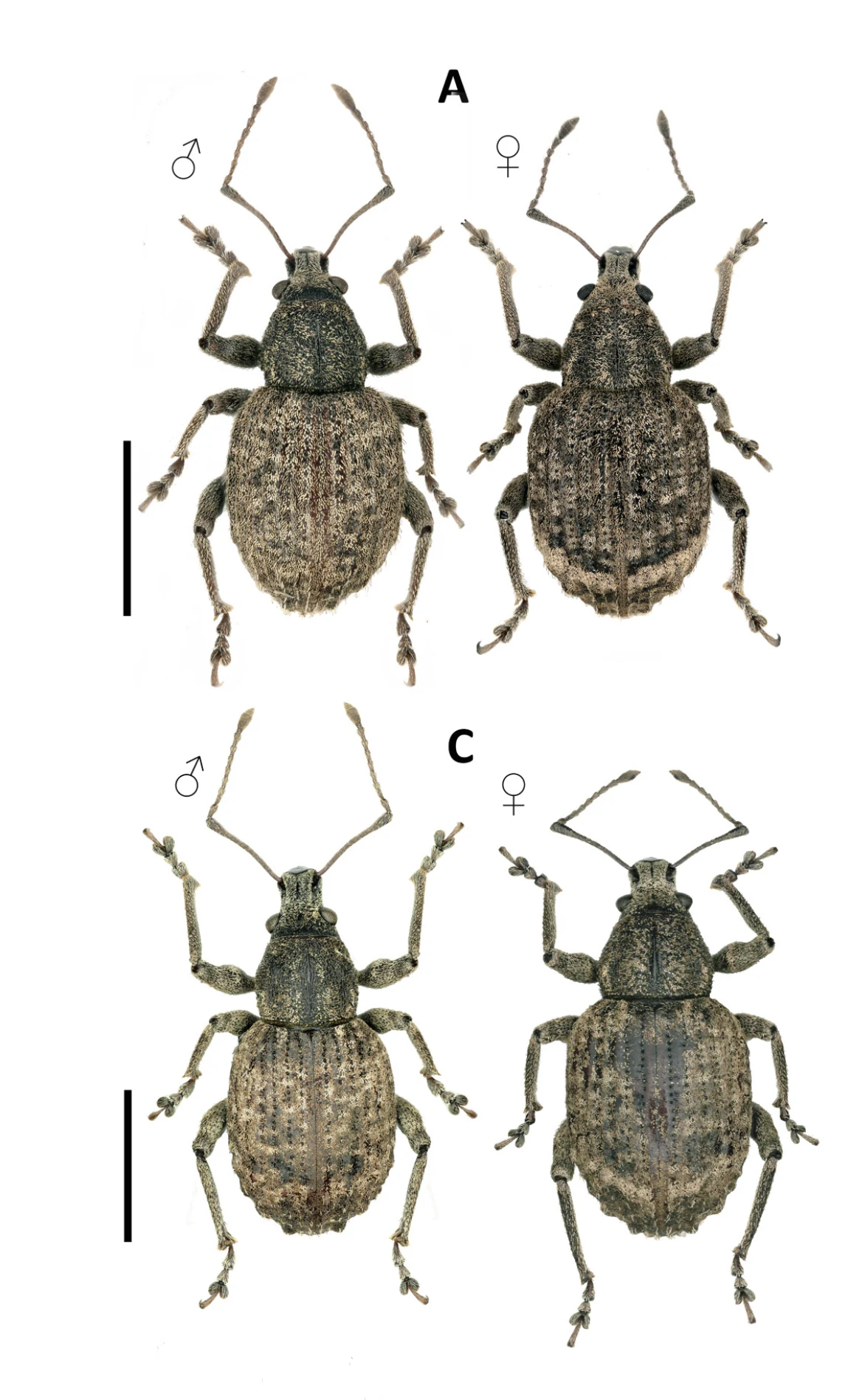
© Julien Haran
Main findings:
- Genome-wide divergence and species delimitation analyses indicate the presence of at least one cryptic species.
- Phlyctinus xerophilus B3 shows interspecific levels of genome-wide divergence with other xerophilus lineages, while being consistently recovered as a separate species in
sNMFandbPTP.
- Phlyctinus callosus A4, on the other hand, shows high differentiation, but not divergence, indicating strong demographic effects.
- Phlyctinus xerophilus B3 shows interspecific levels of genome-wide divergence with other xerophilus lineages, while being consistently recovered as a separate species in
- Evidence for admixture between populations at the intraspecific level
- A faint signal of interspecific hybridization between both species, warranting further exploration of contact zones
- Several putative ecologically-relevant regions evolving under selection, including a digestive enzyme and a pesticide resistance factor. (To be confirmed soon !)
Phlyctinus photographs courtesy of:
Banner | © Julien Haran
Right-hand side | Haran, J. M., Hansen, S., Benoit, L., & Addison, P. (2020). Description of five new species in the genus Phlyctinus Schoenherr (Coleoptera, Curculionidae): a first step in deciphering the P. callosus complex. European Journal of Taxonomy, 669. https://doi.org/10.5852/ejt.2020.669