Venom biomechanics and systematics in Colombian scorpions
Some scorpions aren’t happy with just stinging …
Quick links to both papers and a related poster:
Some context
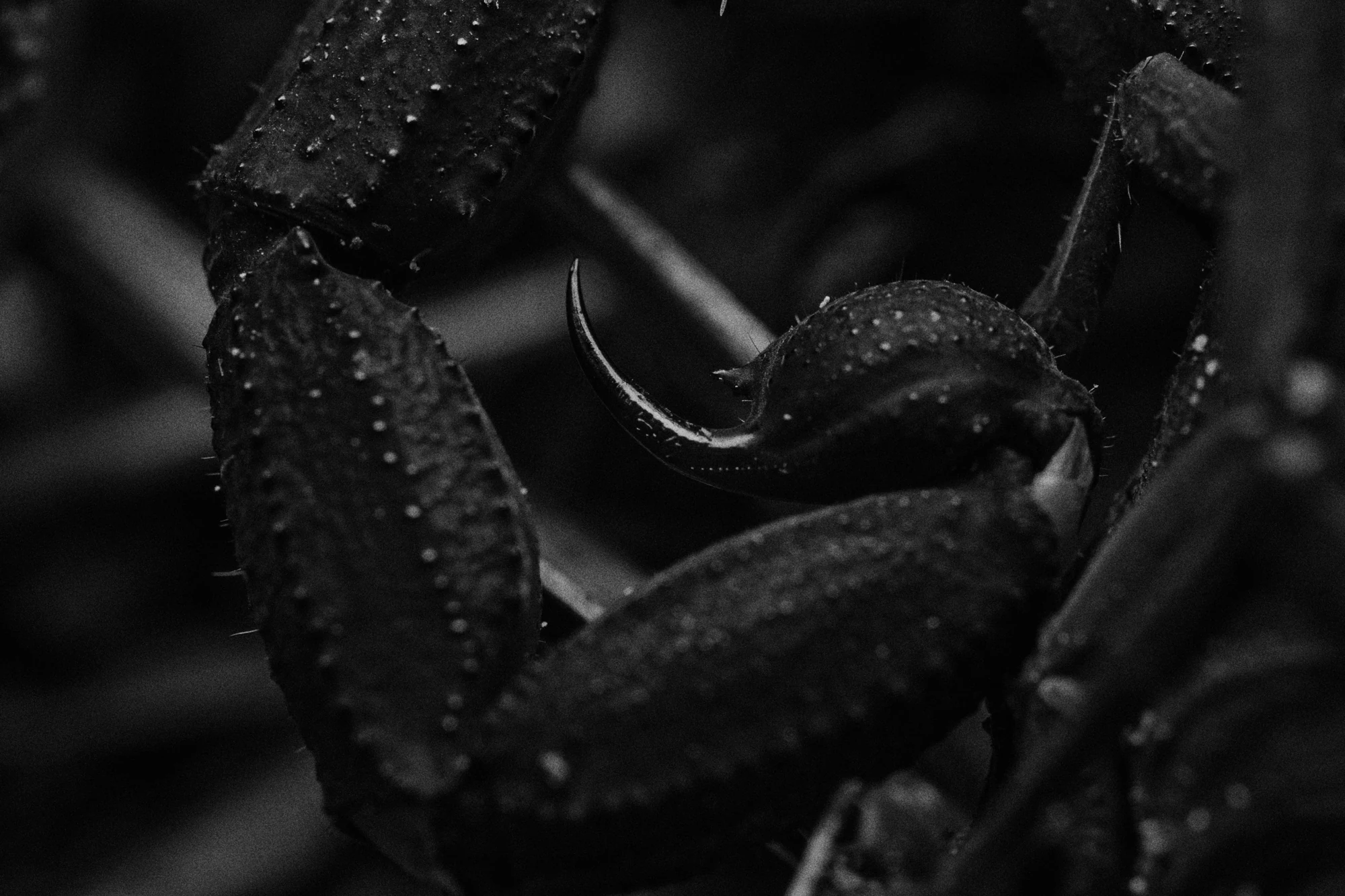
My stay in Colombia was a great opportunity to experience neotropical fauna and flora for the first time in the wild. After long hours of working with butterflies, I would often head to the forest at night. Lit by the faint glow of a UV flashlight, I spent countless hours looking for scorpions. I eventually found some — and it turned out that my little patch of forest hosted two undescribed species. Remarkably, disturbing one of these scorpions had me realise that it was capable of venom spraying, a behaviour only known from two other genera. I characterized this behaviour, compared it to previous data, and described both species.
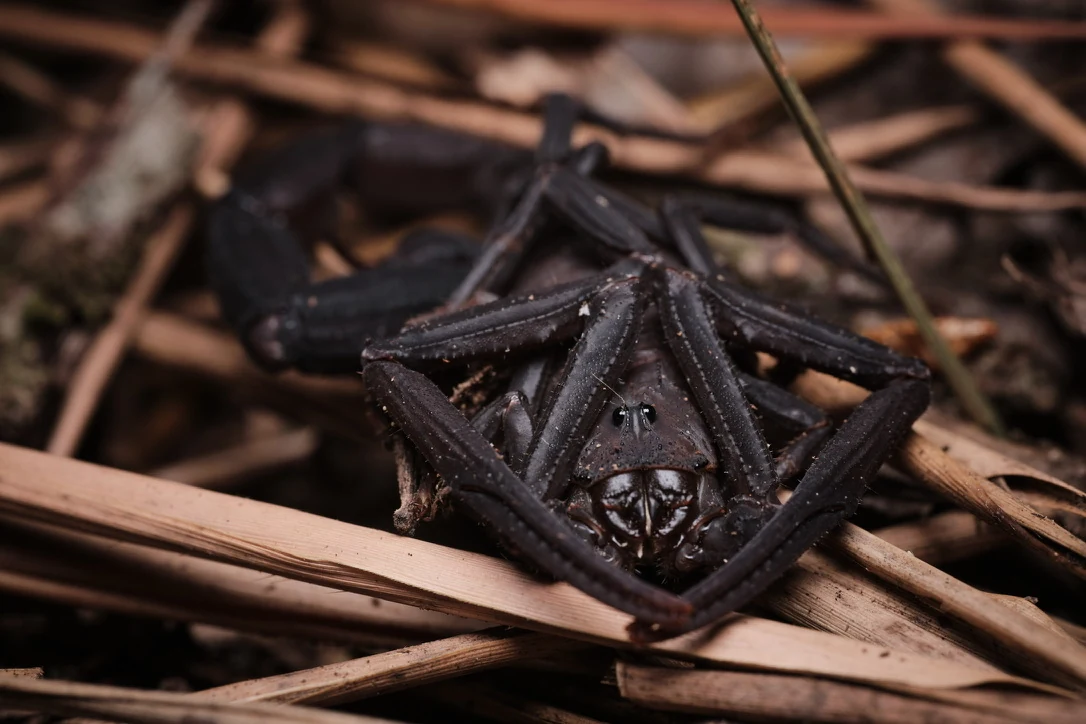
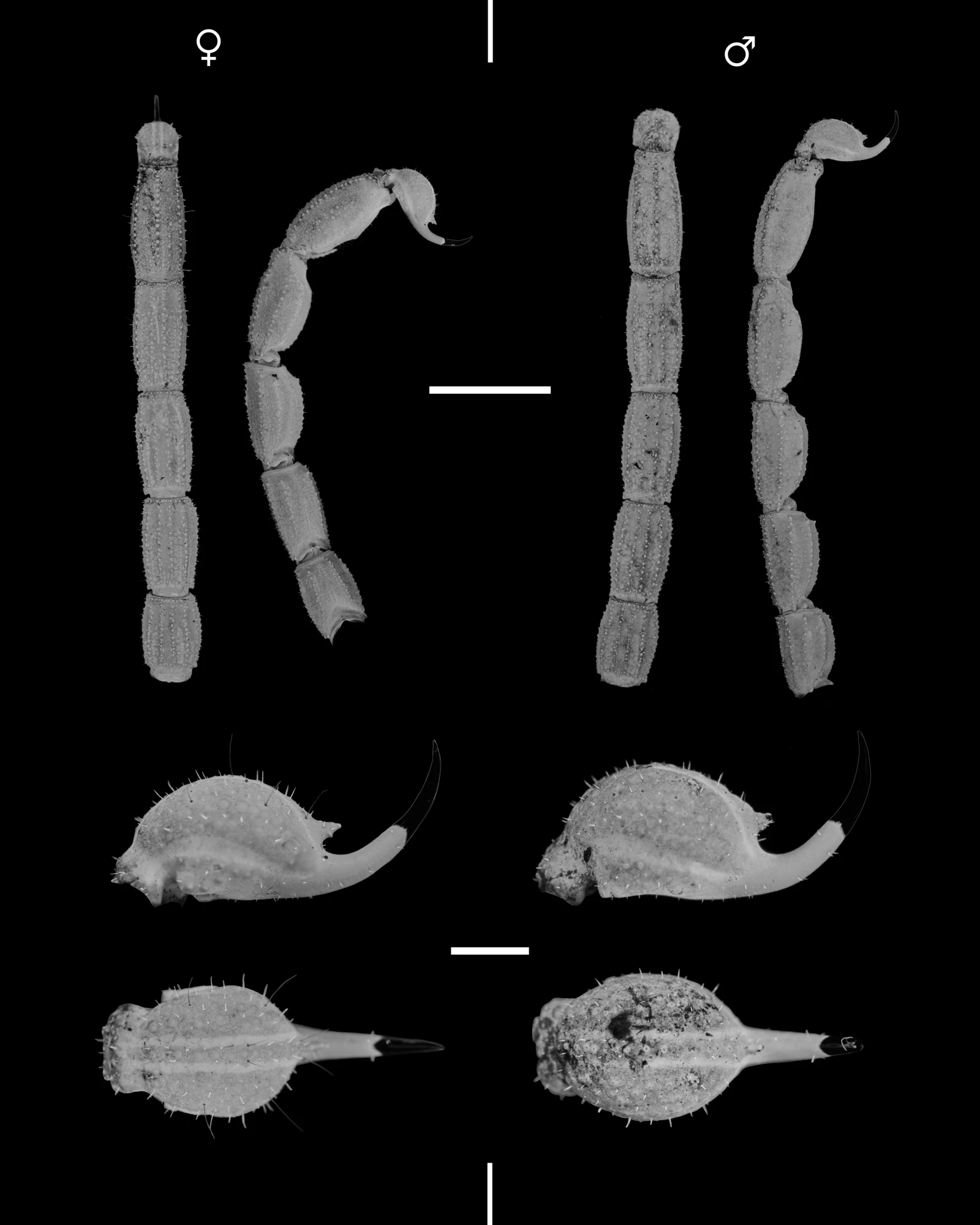
Tityus (Atreus) icarus sp. n. was published in Faunitaxys in October 2024, and Tityus (Tityus) achilles sp. n. was published in the Zoological Journal of the Linnean Society in December 2024.
Species descriptions
UV-macrophotography, morphometrics, and morphological characterization
Biomechanics of venom spraying
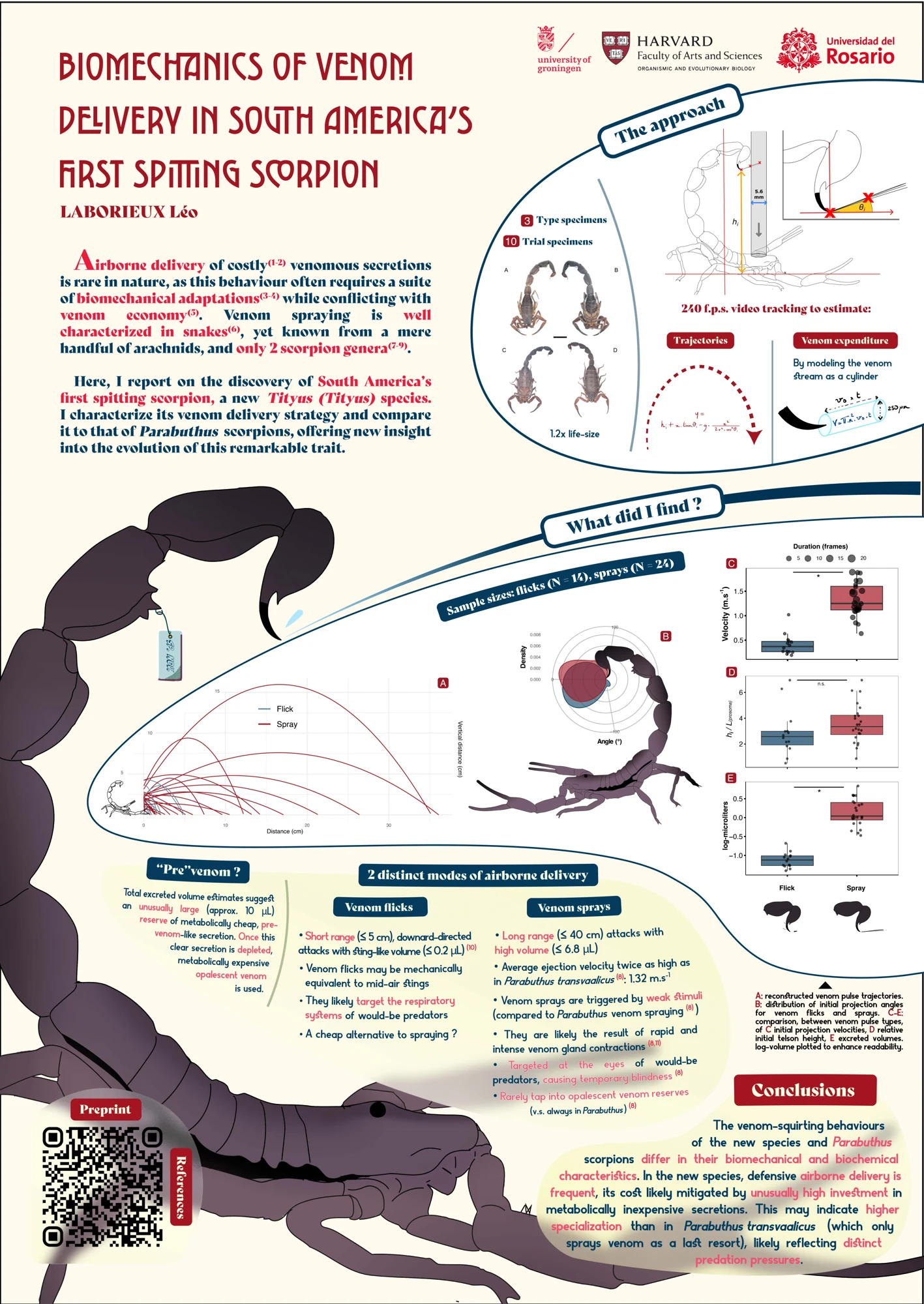
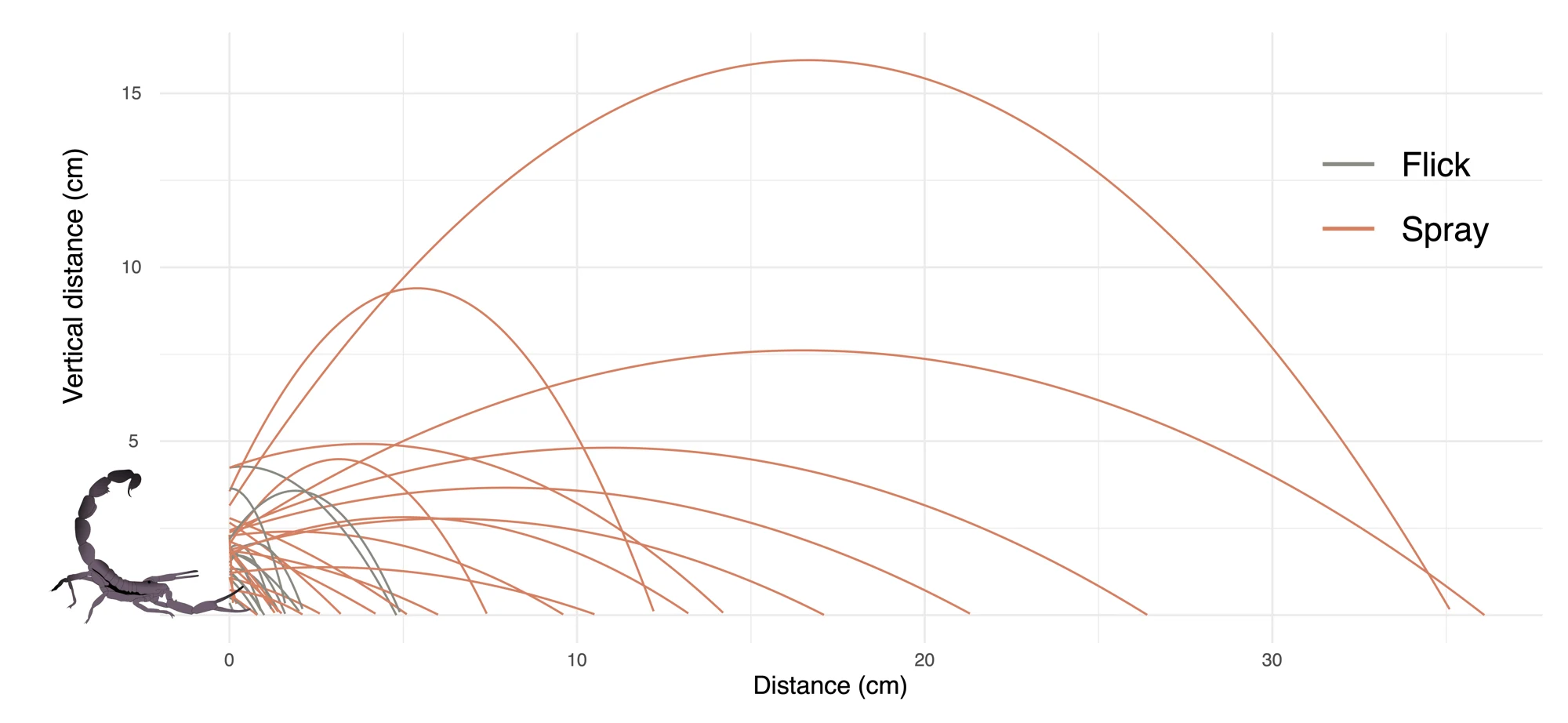
To compare the new species to other spraying scorpions, I recorded venom squirting behaviour in 10 specimens using high-speed video. After extracting initial projection velocities, heights and angles from the video data, it is relatively easy to reconstruct full trajectories according to:
With initial height , initial angle and initial velocity .
Main findings:
Published at the Zoological Journal of the Linnean Society
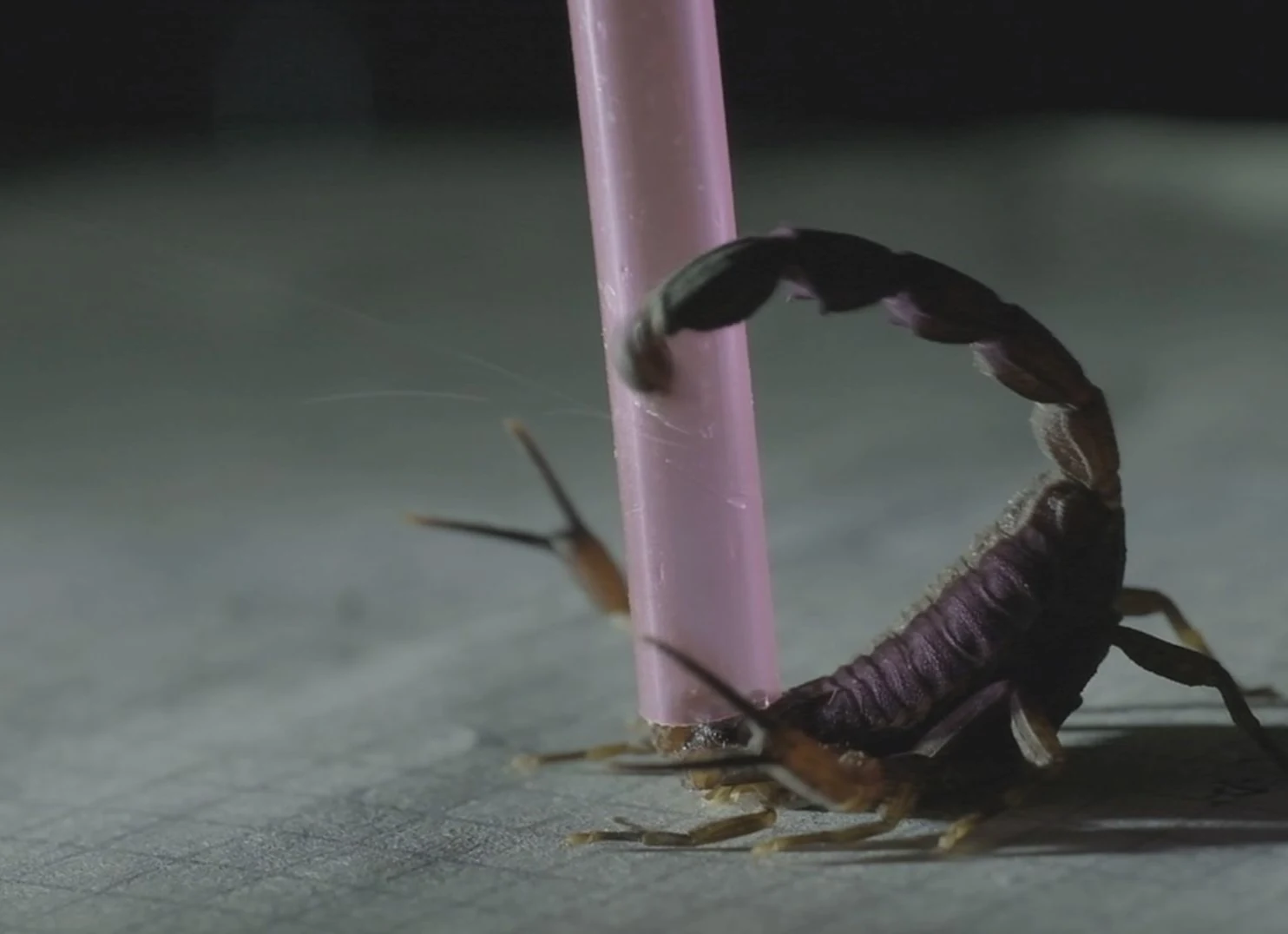
- Tityus (Tityus) achilles employs two types of remote defenses (single droplet or continuous stream) with distinct velocities, ranges, and volumes.
- Venom can be delivered at a distance of up to 35 cm, targeting the sensitive tissues (eyes, respiratory systems) of a potential predator
- Venom spraying behaviour is associated with comparatively light stimuli VS. other venom-spraying scorpions
- Overall, the venom expenditure strategy of the new species is markedly different to that of other spitting scorpions, with a large reserve of metabolically inexpensive secretion used for airborne delivery
- The convergent evolution of venom squirting in scorpions may be underpinned by very different selection pressures
34st European Congress of Arachnology (ECA)
Awarded 1st place in the poster category !